
New York Gives You the World. Arizona Gives You What the World Cannot.
For New York residents who have built a life at the highest level and want the outdoor season and physical space the city cannot provide — Scottsdale and Paradise Valley deliver both, without asking you to leave anything behind.
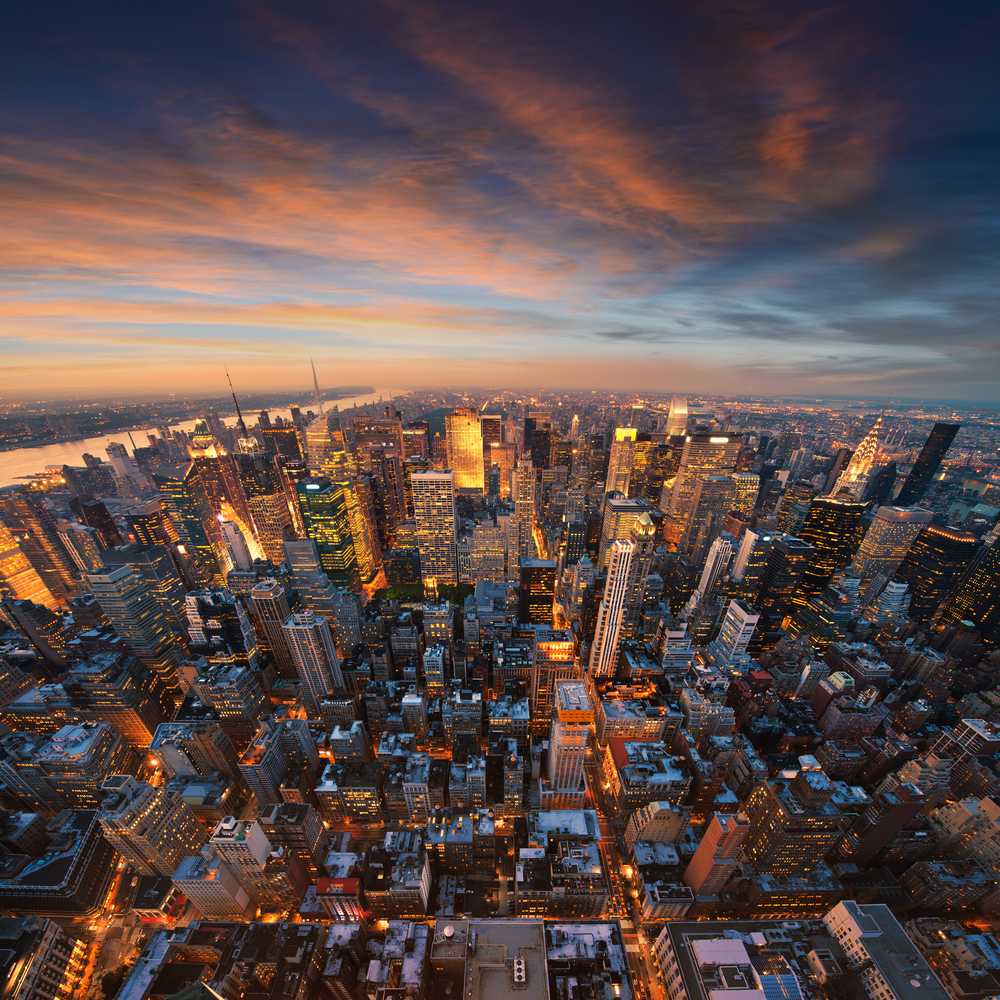
New York is not a city people need to be persuaded to love. It is the world’s most concentrated expression of what a city can be — the finance, the culture, the architecture, the restaurants, the particular energy of eight million people who chose to be here and would not be anywhere else. You did not end up in New York. You chose it, you built something inside it, and you have no intention of leaving it behind.
What Arizona offers is not a departure from any of that. It is the addition of two things that New York, for all its extraordinary offerings, genuinely cannot provide — not in the Hamptons, not in Connecticut, not at any price point in the five boroughs or beyond.
The first is the outdoor season. New York winters are cold, and from November through March the outdoor life that the city’s professional class pursues with real commitment contracts into something that requires negotiation — the golf ends, the mornings require layers, and the evenings on a terrace that define the best months of the year simply stop. Arizona’s October-through-April season restores exactly those months: championship desert golf running through February and March, morning hikes under clear desert skies, evenings on a private patio in air that is dry and warm and costs nothing in effort or equipment.
The second is space. New York’s luxury residential market, no matter how exceptional the address, is fundamentally vertical, dense, and adjacent to everything and everyone. That is part of what makes it extraordinary. It is also, for the buyer who has spent decades in that environment and has earned something different, a constraint that no amount of money in New York can fully dissolve. A Paradise Valley estate on a generous private parcel, in a guard-gated community, under a sky so open and uninterrupted it takes a moment to adjust — that is something New York cannot offer. Not as a weekend rental. Not as a hotel suite. Only as a home you own.
Greater Phoenix — Scottsdale, Paradise Valley, Arcadia — has become the destination of choice for the most discerning buyers from the Northeast, and for good reason. The communities here are private and intentional. The golf is world-class and accessible in ways New York’s finest clubs, with their waitlists and their compressed seasons, cannot match. The events calendar is nationally significant. And the desert landscape — saguaro, granite, mountain ridgelines under an enormous sky — is not a consolation for the absence of the Hudson. It is a completely different kind of visual world, beautiful in a register that the northeast does not reach, and worth owning a piece of on its own terms.
Why It Resonates for New York Residents

The Outdoor Life
New York’s professional class pursues the outdoor life with a discipline that the city’s winters make genuinely difficult. Golf among finance and private equity buyers is not casual — it is serious, practiced, and conducted at clubs where membership represents a significant investment of money, time, and social capital. The season in the Northeast ends abruptly in November and does not resume until April or May, leaving five months of the year in which the game simply stops. For a buyer who would play every week if the weather allowed, that interruption is not a minor inconvenience. It is a loss that compounds across decades.
Desert golf in North Scottsdale addresses that loss with specificity and at scale. The private clubs here — Estancia, Whisper Rock, Desert Highlands — are built for the serious player in a setting of genuine visual consequence. Fairways that run through protected Sonoran terrain, with native saguaro cactus lining the rough and granite mountain ranges visible from every tee box. Maintenance standards that reflect the expectations of a membership who have played Augusta and Cypress Point and Seminole and know immediately what they are looking at. Court availability and pace of play that the most celebrated clubs in the Northeast — constrained by season, by weather, and by waiting lists measured in years — cannot reliably offer. And conditions that run uninterrupted from October through late April, precisely the months when every course the New York buyer belongs to is either closed or operating under conditions that require apology.
Beyond golf: McDowell Sonoran Preserve covers more than 30,000 acres of protected desert wilderness within Scottsdale city limits — a trail network of genuine scale and variety, open every morning under skies that the desert’s exceptionally low humidity keeps clear and specific in their beauty. For the New York buyer accustomed to running in Central Park in January, the experience of hiking a desert trail at sunrise in February without a layer is not a minor upgrade. It is a different life. Cycling along the Arizona Canal, pickleball at private clubs with courts that are never rained out, pool culture that runs without interruption across five months, evening walks through preserved desert neighborhoods where the air has cooled and the stars above are dense in a way that Manhattan’s light pollution never permits — the variety of what the outdoor life looks like in greater Phoenix from October through April is, for the New York buyer who has been managing around winter for decades, revelatory in its consistency.

The Events and Experiences
New York buyers have seen the finest events the world produces. The auction houses, the art fairs, the sporting events, the cultural calendar of a city that draws the world’s best performances, collections, and exhibitions to a single island. They recognize immediately the difference between an event that is genuinely significant and one that merely occupies the category.
The greater Phoenix winter season offers events that meet that standard in their own domains — and for the New York buyer, the most direct entry point is Barrett-Jackson.
The collector car auction held each January at WestWorld of Scottsdale draws the country’s most serious automotive collectors, and the overlap with New York’s Pebble Beach and Amelia Island audience is direct and substantial. Finance and private equity wealth in New York has produced one of the most active collector car communities in the country — buyers who understand the distinction between vehicles, who follow the provenance closely, and who find in Barrett-Jackson the winter equivalent of the summer events they have been attending for years. Arriving at the auction as a homeowner who drove here from a property thirty minutes away — rather than as a visitor who flew in for the weekend — changes the nature of the week in a way that is difficult to articulate and immediately understood once experienced.
The Waste Management Phoenix Open at TPC Scottsdale is the most-attended tournament on the PGA Tour — an event that the golf-committed New York buyer has perhaps watched from a television in February while their own club sits under snow, and that becomes, upon attending as a resident, a different experience entirely. The 16th hole in particular — the crowd, the scale, the particular electricity of a packed outdoor stadium in brilliant winter sunshine — is something that professional golf in the broadcast era cannot replicate. You are there. That is the point.
Cactus League spring training runs February through March across more than a dozen intimate desert stadiums — compact, accessible, and built for the kind of casual attendance that a New Yorker, accustomed to planning Yankee Stadium visits months in advance, finds immediately appealing. Neither the Mets nor the Yankees train in Arizona, but the Cactus League experience is not primarily about team allegiance. It is about baseball in the sun, in February, attended on a Wednesday afternoon as a local with no particular plan — a pleasure that belongs exclusively to people who live here.
Beyond the anchors: the Scottsdale Arts Festival in March, resort programming at The Phoenician and Four Seasons Scottsdale at Troon North and Sanctuary Camelback Mountain, polo at WestWorld, the culinary scene that operates at full depth and sophistication from November through April. For the New York buyer whose standard for an events calendar was set by the city that invented the concept, Arizona’s winter season is not a substitute. It is a parallel — different in character, equally curated, and available only to the people who chose to own here.

The Retirement Runway
For New York residents in their late 50s and 60s — the private equity partners, the portfolio managers, the attorneys and developers who built significant wealth in the most competitive market on earth — the Arizona question is not whether they can afford the finest second home. It is what the finest version of the next chapter actually looks like in practice.
The answer that Scottsdale and Paradise Valley consistently deliver is this: a home base for the outdoor months New York cannot provide, in a community where the social infrastructure is assembled and waiting, where the golf runs through March and the mornings are always available, and where the physical environment — warm, dry, open, quiet — supports an active body and an engaged mind in ways that a Manhattan winter, for all the city’s extraordinary offerings, cannot match.
The pattern among New York buyers who make this move is consistent: they planned for a season and discovered a community. The neighbors who return every year and have been doing so for a decade. The club culture that rewards belonging over many seasons. The social life that is not assembled from scratch each arrival but simply resumed — warmer, more familiar, more genuinely one’s own with each passing year. The Arizona season that turned out to be richer and more socially rewarding than expected, and the New York life that returned to in spring feeling, for the first time, completely balanced.
The Hamptons or Connecticut second home that many New York buyers already own is not a competitor to this. It is a complement — the summer place and the winter place, each doing precisely what the other cannot, and together producing the twelve-month version of the life that New York alone only offers in halves. Arizona is not a replacement for a weekend in Bridgewater or a summer in Sagaponack. It is what winter looks like when you decide it should not be wasted.
The lock-and-leave quality of the best luxury properties here is the operational foundation on which this lifestyle rests. A properly managed estate in a guard-gated community or a luxury condominium in a resort-adjacent building manages itself completely in the owner’s absence — professionally maintained, secure, climate-controlled, and ready on arrival every October. You land in Phoenix, drive to Scottsdale or Paradise Valley, and walk into a home that is exactly as you left it. No list. No management calls from the city. No catching up. The home simply waited and is now ready for the season.

The Lifestyle Upgrade
New York buyers bring the world’s most exacting reference point to any evaluation of dining, arts, and hospitality — and the honest case for Scottsdale is not that it equals New York in scale but that it delivers a concentrated, seasonally specific excellence that the desert produces on its own terms and that rewards the buyer who arrives without fixed comparisons.
The culinary landscape in greater Phoenix has earned its recognition through talent rather than trend. James Beard-recognized chefs, wine programs built around serious cellars, tasting menus that take the Sonoran Desert pantry as a genuine point of departure rather than a marketing angle, and an outdoor dining culture that operates at its most beautiful from November through April. A well-designed Scottsdale patio in January — the air dry and cool, the night sky fully visible, the kitchen producing food that reflects real ambition — is a dining experience specific to this place and this season. It does not compete with Per Se or Le Bernardin. It offers something those restaurants cannot: February outside, under stars, in a place that belongs to you.
The arts community in Scottsdale is more serious than its desert setting might initially suggest to a New York buyer. The Scottsdale Museum of Contemporary Art brings genuine curatorial rigour to a city that also hosts one of the densest concentrations of commercial art galleries in the American Southwest — along Marshall Way and through the Arts District, the collecting culture is active and the programming runs through the season with the energy of a community that takes these things seriously. For the New York buyer already engaged with the auction houses, Art Basel, and the gallery culture of Chelsea and the Upper East Side, the Scottsdale arts scene is a different conversation at a different scale — more accessible, more personal, and specific to the desert Southwest in ways that make it worth knowing on its own terms.
Resort hospitality at The Phoenician, Four Seasons Scottsdale at Troon North, and Sanctuary Camelback Mountain operates at a standard the New York buyer recognizes from the finest properties they have stayed in across the world. The service, the design, the physical setting against the mountain — these are properties that hold up to the reference point a New Yorker brings to every hotel room they enter. Living within or adjacent to resort-caliber communities means that standard extends into daily life rather than remaining the destination of a special occasion. That is a distinction that matters across an entire season.

The Arizona Outdoor and Events Calendar
The October-through-April season in greater Phoenix moves through distinct phases, and for the New York buyer planning a first full season, understanding the rhythm before building a year around it is worth the effort.
October and November are the opening — the desert releasing the last warmth of summer, the mornings beginning to clarify toward the quality that defines the season at its best. Golf resumes at full pace on courses that have been maintained through the summer precisely for this moment. The trails in McDowell Sonoran Preserve fill with residents who have been away since May. The desert light in these months is specific to the Southwest — long, golden, and clean in the way that low-humidity air uniquely produces — and it is the first thing most arriving New York buyers mention when asked what surprised them.
December brings the social season to full assembly. Resort programming reaches its peak. Restaurants fill with residents who have arrived and settled in. Private clubs open their event calendars. Golf is at its finest — cool mornings, warm afternoons, conditions that the New York buyer last experienced in October on a course that is now either closed or playing through mud.
January belongs to Barrett-Jackson. The auction at WestWorld fills the desert with a week that the collector car world organises around — serious bidders, serious machines, and the particular atmosphere of a room in which the people next to you know exactly what they are looking at and intend to bid. For the New York buyer whose relationship with the collector car world runs through Pebble Beach or Amelia Island, this week has a specific gravity. Arriving as a homeowner who has been in the community since October changes it from an event into a chapter.
February brings the Waste Management Phoenix Open — the tournament that, for the golf-committed New York buyer, represents the clearest single expression of what owning in this market makes possible. Attending on a Saturday as a resident, walking from a home you own to a course that is genuinely alive with something significant, is the experience that every subsequent conversation about the Arizona purchase returns to. Cactus League spring training opens across the valley in February as well, offering the casual, repeated, weekday-afternoon-in-the-sun baseball attendance that New York’s compressed season and sold-out stadiums have never quite provided.
March and April close the season with the Scottsdale Arts Festival in Old Town, the desert wildflowers briefly and specifically beautiful, the evenings long and warm and lit from below by the particular amber light that the desert produces as the days lengthen. The New York buyer who returns home in April carries something they did not have in October: a second community that is genuinely theirs, and the knowledge that it will be ready again when the city’s weather turns in November.
Community Match
Greater Phoenix’s luxury residential zones are distinct in character, and the right fit for a New York buyer depends on how the home will be used, what kind of community reflects the life you intend to build in Arizona, and how the balance between privacy and proximity to the city’s social and cultural energy should be weighted.
Scottsdale
Scottsdale spans from the cultural vitality of Old Town in the south to the dramatic terrain of North Scottsdale, where guard-gated communities like DC Ranch, Silverleaf, Estancia, and Troon Village define what private-club luxury looks like at its most fully realised in the American desert.
North Scottsdale’s estate communities are built around championship golf, mountain preserve access, and a neighbor profile that is intentional and consistent across many seasons. Silverleaf at DC Ranch represents the top of the Scottsdale luxury market — custom estates set against the McDowell Mountains, a private club of extraordinary quality, and a social community populated by serious buyers from across the country who chose this address with the same deliberateness a New York buyer of equivalent standing would bring to the decision. The setting is unlike anything available in the Northeast at any price. That is part of why it is worth considering.
For buyers who want proximity to Old Town’s dining, galleries, and cultural programming alongside their estate or condominium, South Scottsdale and the Camelback Corridor offer luxury high-rise residences and resort-adjacent buildings that keep the best of the city within walking distance — a scale of walkable urban luxury that New York buyers recognise and find immediately comfortable.

Paradise Valley
Paradise Valley is Arizona’s most exclusive residential municipality — roughly 13,000 residents, no apartments, no commercial development of any kind, no density. What there is: some of the finest privately owned homes in the American Southwest, on large and genuinely private parcels, framed by Camelback Mountain and Mummy Mountain, with the full amenity infrastructure of the greater Phoenix luxury market within reach while remaining invisible from the property itself.
For the New York buyer whose primary residence is, by definition, surrounded by the city — adjacent to neighbors through walls and floors and the shared infrastructure of vertical living — Paradise Valley offers something that no amount of money in Manhattan can purchase: genuine physical separation from everything and everyone who is not specifically invited. A large parcel. A view that contains only mountain and sky. A community of neighbors who chose this town because they understand exactly what it provides and value it for precisely that reason.
Camelback Inn, Mountain Shadows, and The Phoenician are within the town’s limits or immediately adjacent. The hiking on Camelback Mountain is among the finest in the state. The town’s deliberate preservation of its residential character is a policy maintained across decades — and it is the foundation on which everything Paradise Valley is built.

Old Town Scottsdale and Arcadia
For the New York buyer whose Arizona life is social, walkable, and benefits from the kind of urban energy that feels familiar from years in the city — Old Town Scottsdale and the adjacent Arcadia neighbourhood offer a completely different experience from the private enclaves of the north and west.
Old Town places you within walking distance of Scottsdale’s finest restaurants, its gallery district, and the programming of the city’s major cultural and events calendar. Arcadia — between Camelback Road and the Arizona Canal — has become one of the most sought-after luxury residential pockets in the metro, known for its mature landscaping, proximity to Camelback Mountain, and a dining and café scene that draws residents from across the valley. The luxury condominiums in this corridor offer some of the strongest lock-and-leave capability in the market, with professional management infrastructure that the New York buyer — accustomed to the service standards of a well-run co-op or condominium building — will recognise as the correct standard.

Making the Move

Define how you will use the home.
For most New York buyers, the Arizona home is an October-through-April property — the winter second home that complements a summer place in the Hamptons or Connecticut and together produce the twelve-month outdoor life that New York alone cannot provide. Naming that structure clearly makes every subsequent decision about property type, community, and management requirements precise rather than approximate.

Choose your community type.
North Scottsdale’s guard-gated estate communities, Paradise Valley’s private residential enclaves, and the walkable urban energy of Old Town and Arcadia are genuinely different experiences. Work with a buyer’s agent who can show you all three during peak season — when the community is assembled and the social life is fully underway — and who has specific experience working with buyers from the Northeast.

Understand the luxury condo versus estate decision
For many New York buyers, a luxury condominium in a resort-adjacent building with professional management is the operationally correct answer — the equivalent of a well-run Manhattan building, managed to the standard they already expect, with the ability to arrive and depart on any schedule. For others, the land, the privacy, and the scale of a Paradise Valley or North Scottsdale estate is the only acceptable standard. Both exist at the highest level of quality in this marke

Position Arizona relative to your existing second home.
If you already own in the Hamptons or Greenwich, Arizona is the winter complement — not a replacement for a summer place, but the answer to the months that summer place cannot help with. Work with an agent who understands this geography and can help you think through the structure clearly.

Work with a specialist.
The best properties in the communities that suit a New York buyer of this profile are transacted before broad public exposure. A buyer’s agent with deep market relationships, specific experience with Northeast buyers, and the understanding of what a New York buyer requires from a second home is not a convenience — it is the difference between the right property and the available one.
What to Look for in a Luxury Second Home
Space and privacy.
For the buyer whose daily life is conducted in vertical, adjacent, shared-wall proximity to everything New York offers, the physical separation that a Paradise Valley or North Scottsdale property provides is not a feature — it is the point. Evaluate the parcel. Evaluate the sight lines. Evaluate what is visible from the patio. The correct answer is: mountain and sky.
Outdoor living quality.
The patio, pool, and outdoor kitchen are the primary living spaces from October through April. A property with a magnificent interior and a compromised outdoor environment has misunderstood the Arizona market. Evaluate outdoor spaces with the same rigour you would apply to a Park Avenue apartment’s layout — because in this market, the outdoor room is the living room.
Community alignment.
The neighbours and social infrastructure of the community will define the Arizona experience across many seasons more than any architectural detail of the home. Spend time in the community during January or February — when the season is fully assembled — before committing. The difference between a community that has been building something together for years and one that simply shares an address is felt immediately and is not correctable by renovation.
Management infrastructure above all.
For the New York buyer whose life in the city continues to require full attention, the Arizona property must perform completely in their absence from April through October. HOA management quality, property management partnerships, climate control protocols, and arrival preparation are operational requirements. The property must be as ready in October as it was when you left in April. That readiness is non-negotiable.

Elevate Your Lifestyle
New York gave you everything it promised — the career, the culture, the network, the particular satisfaction of having built something significant in the world’s most demanding city. It gave you a life that operates at a standard most people will never experience. Nothing about what comes next diminishes any of that.
What Arizona adds is the outdoor season New York cannot provide and the physical space New York cannot produce — on a large private parcel, under a sky that has no ceiling, in a community of people who made the same deliberate and informed decision you are now considering.
The buyers who find their way to a second home in Scottsdale or Paradise Valley are not the ones who left New York behind. They are the ones who understood that a life built at this level deserves twelve full months — and that the city which gave them everything cannot, quite, give them that.
October arrives in the desert with warmth and clarity. The courses are immaculate. The community is assembling. The question — as it always is for the New York buyer who finally acts — is only why it took this long.
Ready to explore luxury second homes in Scottsdale and Paradise Valley?
Carl Chapman, REALTOR® at West USA Realty, specializes in helping out-of-state buyers find the right home in Arizona’s luxury market — without the learning curve.

